
A road marking earns its retroreflectivity twice. The first chance comes on the road, when a contractor drops beads onto a film that is still soft. The second comes earlier and more quietly, inside the paint plant, when premix beads are stirred into the melt.
Buyers audit the first and assume the second. That is a costly order of priorities. A marking can only return as much light as the beads inside it allow: the internal bead content sets the ceiling, and careful application at the job site can only approach it. When acceptance testing samples the finished line — which is exactly what the 2024 Chinese marking standard now requires — a badly loaded batch of paint cannot be rescued downstream. The mechanism that makes a line visible at night is worth understanding before the purchase order is written, because most of it is settled in the plant.
Type 1 and type 2 are not interchangeable
GB/T 24722-2020, the Chinese national standard for glass beads used in pavement marking materials, sorts beads by the job they do rather than by particle size alone.
| Type | Intended job (GB/T 24722-2020, 4.2) |
|---|---|
| 1 | Drop-on beads for thermoplastic, two-component and waterborne marking paints |
| 2 | Premix (internal) beads for thermoplastic and two-component paints |
| 3 | Drop-on beads for solvent-based paints |
| 4 | Wet-night beads, used together with non-wet-night beads as drop-on material |
The distinction is not cosmetic. A type 1 bead has been sized to survive a few seconds of contact with a hot film and then sit proud of the surface. A type 2 bead has been sized to live inside that film for the life of the marking. Send the wrong one and the failure shows up months later, not on the day of application. If the division of labour between the two is still fuzzy on your side, the technical difference between drop-on and premix beads is the place to start, because it also explains why the sieve tables in the next section refuse to line up.
The gradation window for type 2 beads
Premix beads are specified by sieve fraction, and the type 2 table sits in a much narrower and coarser band than the type 1 table.
| Sieve fraction (type 2, premix) | Mass percentage |
|---|---|
| Larger than 600 µm | 0 |
| 600 µm down to 300 µm | 50%–90% |
| 300 µm down to 150 µm | 5%–50% |
| 150 µm and smaller | 0%–5% |
For comparison, here is the type 1 window that the same standard applies to drop-on beads:
| Sieve fraction (type 1, drop-on) | Mass percentage |
|---|---|
| Larger than 850 µm | 0 |
| 850 µm down to 600 µm | 15%–30% |
| 600 µm down to 300 µm | 30%–75% |
| 300 µm down to 106 µm | 10%–40% |
| 106 µm and smaller | 0%–5% |
Two features of the type 2 window are worth pausing on. The first is the hard ceiling at 600 µm: a premix bead lives inside the film, and only the portion that reaches the surface can return light, so an oversized bead simply sinks and contributes nothing. The second is how much weight sits in the 300–600 µm band — at least half the mass, by requirement.
The 2020 revision pushed both windows upward. For type 1 beads, the 600–850 µm band moved from 5%–30% to 15%–30%, and the 300–600 µm band from 30%–80% to 30%–75%. For type 2 beads, the 300–600 µm band moved from 40%–90% to 50%–90%. The direction of travel is consistent: less fine material, more coarse material, because the larger fractions carry more of the retroreflective load.
How much to load: where the 30% figure comes from
Glass bead content is the single most argued number in a premix specification. Different documents in the same supply chain cite different floors, and all of them are defensible.
| Source | Premix bead content required |
|---|---|
| GB/T 16311-2024 (as reported by industry technical sources) | Not less than 30% by mass in thermoplastic reflective markings |
| Government procurement technical specification (2024) | Not less than 20% added to the paint |
| Municipal highway design file | Not less than 30% of the paint mass |
| Expressway design, standard grade | Not less than 30%, roundness not less than 80% |
| Expressway design, high-performance / long-life grade | Not less than 48%, with a graded internal size split |
| General industry practice range | 20%–30% by weight; premix types often mixed at 18%–25% |
Read the table as a ladder rather than a contradiction. The regulatory floor for thermoplastic reflective markings is 30%. Below that you are outside the specification. Real projects run from about 20% in low-grade work to 48% where a long service life is being bought. When you specify, state the loading level and the class it is meant to reach — a paint supplied at 20% and tested against a 48% design will fail, and the bead supplier will be blamed for a decision taken in the tender. A specification checklist for marking projects is a useful companion here, because it forces the loading level to be written down next to everything else.
Six checks on every incoming lot
These are the properties GB/T 24722-2020 sets limits on, and therefore the ones worth measuring or demanding on a certificate of analysis.
| Property | Requirement | Clause |
|---|---|---|
| Roundness, low refractive index beads | Not less than 80%. For the 850–600 µm fraction of type 1, not less than 70% | 5.2 |
| Defective bead fraction, medium and high refractive index beads | Not more than 20% — this index replaces roundness for these grades | 5.2 |
| Density | 2.4–4.6 g/cm³, rising with refractive index; low-index beads typically 2.4–2.6 | 5.4 |
| Water resistance | Neutralising 0.01 mol/L hydrochloric acid: types 1 and 2 use no more than 10 mL; type 3 no more than 15 mL | 5.6 |
| Magnetic particle content | Not more than 0.1% | 5.7 |
| Heavy metals | Lead, arsenic and antimony each not more than 200 mg/kg | 5.9–5.11 |
There is also a visual requirement, and it is the cheapest check you own: colourless, white or pale yellow beads, clean on the surface, and under a microscope transparent spheres that are smooth and round with no obvious bubbles or inclusions (5.1).
Two of these deserve special attention from a paint plant that exports. The heavy-metal limits — lead, arsenic and antimony at 200 mg/kg each — were newly added in the 2020 edition. They matter because your own customers, particularly in Europe and the Gulf, increasingly ask for them, and because a paint that cannot document its bead input cannot document its own heavy-metal content either. The roundness figure matters for a different reason: roundness is the property that separates a bright line from a dim one, and it is the first thing to drift when a supplier is stretched.
What GB/T 16311-2024 changed for the paint plant
GB/T 16311-2024, which replaced both the 2009 marking quality standard and a separate 2008 standard, took effect on 1 March 2025. Three of its changes reach back up the supply chain into your mixing floor.
The finished marking is now tested for bead content. The 2024 edition added requirements, sampling rules and test methods for the glass bead content, total organic content and heavy metal content of thermoplastic markings. In practical terms, acceptance testing now samples the completed line rather than only the bag of beads that arrived at the yard. A supplier’s certificate is no longer enough on its own — the beads still have to be measurable after the paint has been laid.
Anti-skid performance becomes universal. All markings must now be skid resistant, with an initial figure of at least 45 BPN for ordinary work and at least 55 BPN for high-skid designs. Overloading a paint with fine beads to chase retroreflectivity can work against this, since it changes the texture of the surface.
Material colour is separated from retroreflective colour. The standard now treats the colour of the marking as laid and the colour the driver sees at night as two different properties with their own chromaticity ranges. The practical consequence is that a yellow reflective line can no longer be brightened simply by adding a large amount of titanium dioxide, which was the traditional shortcut. The full set of changes in GB/T 16311-2024 is worth reading alongside this section, because the standard also sets explicit retroreflectivity classes for white and yellow markings and a measurement window that begins 48 hours after application and ends 30 days later.
The common thread is that the finished line, not the incoming bag, is now the unit of acceptance. That is a good thing for a plant that controls its bead input properly, and an expensive thing for one that does not.
An incoming inspection sequence that fits one shift
None of the checks above require a laboratory. They require a balance, a set of sieves, a microscope, a glass burette, a magnet and a decision about how much you trust the paperwork.
- Draw a representative sample. Take increments from across the lot rather than from the top of one bag, and reduce them by quartering to a working sample.
- Run a sieve analysis. Percentage retained on each fraction is compared directly with the type 2 table above. This is the check that catches the most problems, because a drift toward fine material is easy to miss visually.
- Count roundness under the microscope. A spread of beads on a graticule slide, counted rather than estimated. Anything below 80% for a low-index bead should not be accepted.
- Check density. A pycnometer gives the number; a low-index bead that comes in well above 2.6 g/cm³ is worth questioning.
- Titrate for water resistance. The 10 mL and 15 mL limits above are the acceptance criteria.
- Pull out magnetic particles. A magnet and a balance settle this in minutes, and the 0.1% limit is tight enough to matter.
- Send heavy metals to a third party. Lead, arsenic and antimony are not something you measure in the yard, so the certificate has to carry them.
Each property is tested by the method prescribed in GB/T 24722-2020; what matters commercially is that the certificate you receive states the figure and the lot number, so a result can be traced back if a marking later fails.
What to write into a premix bead purchase order
A premix order that protects the plant names six things: the type (2), the refractive index class, the sieve distribution with the tolerances you will accept, the roundness or defective-bead limit, a heavy-metal statement covering lead, arsenic and antimony, and the moisture protection of the packaging. A bead ordered without a gradation statement is not a specification, it is a hope.
Two details are routinely left off and routinely cause trouble. The first is the size split within the type 2 window: a long-life design may call for a defined proportion above 850 µm, which the generic table does not require. The second is the surface coating. A moisture-resistant coating is tested by whether beads pass through a funnel without stalling (5.8), and it is the difference between beads that flow in your mixer and beads that clump.
Where Linghang fits
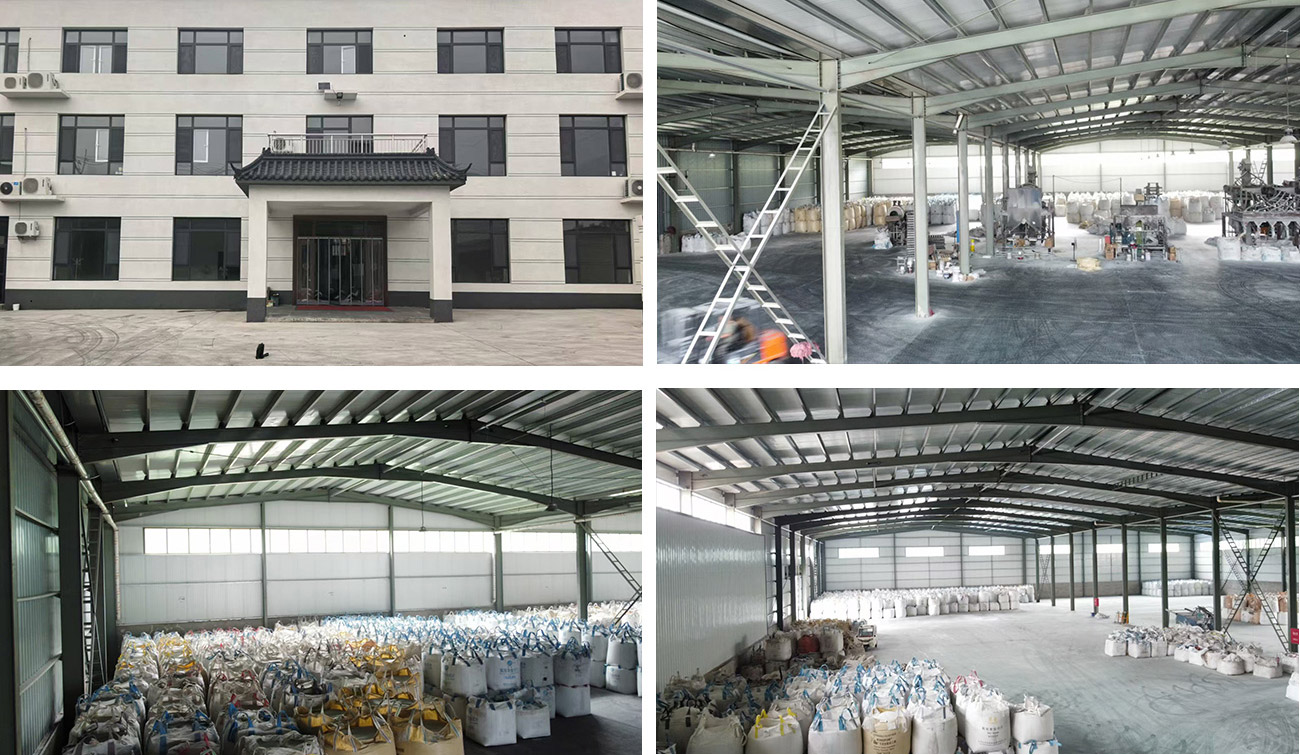
Yongqing Linghang Glass Beads manufactures both drop-on and premix grades for road marking. Premix beads are supplied against the GB/T 24722-2020 type 2 sieve table, and the roundness, density, water resistance, magnetic particle and heavy-metal figures travel with the lot.
Two things make the documentation useful rather than decorative. First, test reports can be issued against GB/T 24722-2020 and, where a project asks for it, aligned with the sieving conventions used by AASHTO M247 and EN 1423 — so a buyer does not pay twice for the same evidence. Second, the heavy-metal limits that the 2020 edition introduced are reported rather than assumed, which is the version of the answer that European and Gulf buyers are now asking for.
If a marking is already failing in the field, the diagnosis usually points somewhere other than the bead bag; ten causes of marking bead failure walks through what each one looks like. If the question is which grade to load, drop-on glass beads for road marking in 20/100 mesh shows the sizes we hold for marking work, and premix grades can be cut to your own sieve requirement.